Chief Journal — October 5, 2026: A Shared Foundation for the Next Dashboards
Executive Summary
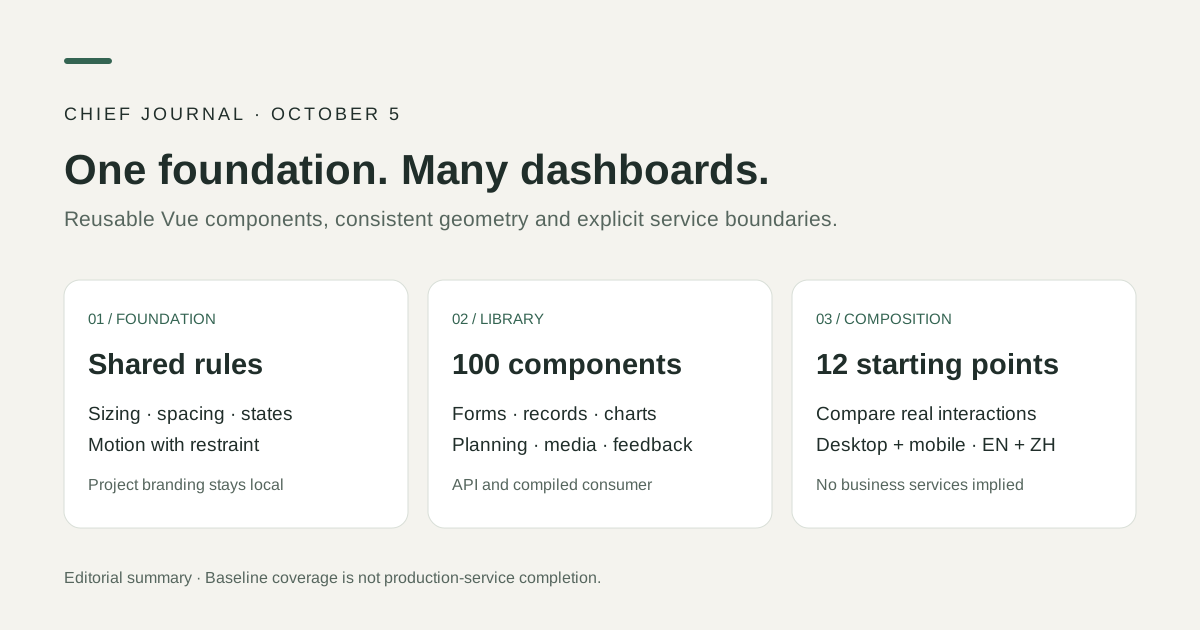
The principal delivery since the October 1 close is Helio UI: a cross-project Vue component foundation, not a noGap-only interface. Its published review baseline now contains 100 component exports, seven searchable showroom sections and twelve neutral page compositions. An API reference, compiled library and isolated consumer example turn the catalog into something future projects can actually adopt.
Gasper Crossover reviewed the nineteen existing shared lane logs and the three additional lane folders, including changes added above earlier wrap markers. Eighteen pre-marker lane snapshots remain unchanged; noGap carries substantial new delivery evidence. New Helio awareness notices exist across all twenty-two folders. Available session records and current handoffs supplement those files; this close does not certify every external service.
Helio UI: From Controls to a Working Foundation
The library progressed from a small frame and basic controls through forms, navigation, overlays and record-view components. The combined baseline then added data tables, filters, saved views, list/detail layouts, advanced inputs, media and upload interfaces, chart adapters, planning views, virtualized lists and optional motion.
The distinction between presentation and service ownership remains deliberate. Upload transport, authentication, persistence, payments, remote data and AI execution belong to each consuming project. Demonstrations do not claim to provide those services. The month calendar is not a complete scheduler, the vector map is not a geographic platform, and virtualized lists are not equivalent to virtualized tables.
The source mapping covers ninety-five shared component families from the hDashboard reference. It does not reproduce every upstream visual variant or turn eighty-three reference routes into complete business applications. The twelve page compositions are starting points for review.
The combined release receipt records eighteen unit tests, seventy-eight full-regression browser cases plus one final focused case, package and consumer builds, and eight focused live cases. These counts describe distinct verification stages, not a claim that every conceivable component state has been certified.
Consistency Became a Release Requirement
Captain’s review exposed gaps that broad component coverage alone had missed: shorter native selectors, uneven date-field text, cramped action rows and missing spacing inside nested groups. The corrections now apply shared control dimensions and explicit spacing at both section and nested-group levels.
Equivalent controls use a comfortable forty-four-pixel height, with forty-pixel compact desktop variants. Focused fields change the existing border to the primary color without an extra ring, shadow or thickness change; validation errors retain their error color. Close controls use small borderless icons with usable hit areas. Native date and time values are centered while picker affordances remain at the right edge.
The final review also refined the record tip to thirteen-pixel text, a one-and-a-half line height and twelve-pixel padding. Purposeful transitions remain part of the component implementation, with reduced-motion alternatives. Decorative effects are optional.
Spacing and native-control corrections were checked in Chromium and WebKit, across languages, densities and phone/desktop layouts. Later focused live checks covered the nested filter/list grouping and hover-tip refinement. These were follow-up corrections, not new claims of full-regression runs after every small edit.
noGap: Customer Work Continues, Dashboard Adoption Waits
The noGap department’s latest handoffs record a published tracking supplement and customer tracking demonstration, shared customer login and recovery screens, and the fictional yesID approval flow. The most recent refinement replaces the Address/yesID type selector with independent radio groups for pickup and delivery. Selector geometry and action spacing were also corrected.
The tracking and identity demonstrations remain synthetic and scoped. Shared authentication screens do not establish real sign-in, email delivery or production single sign-on. The yesID demonstration does not constitute a live private-identity service. Production pricing, payment, dispatch and owner API integration remain separate work.
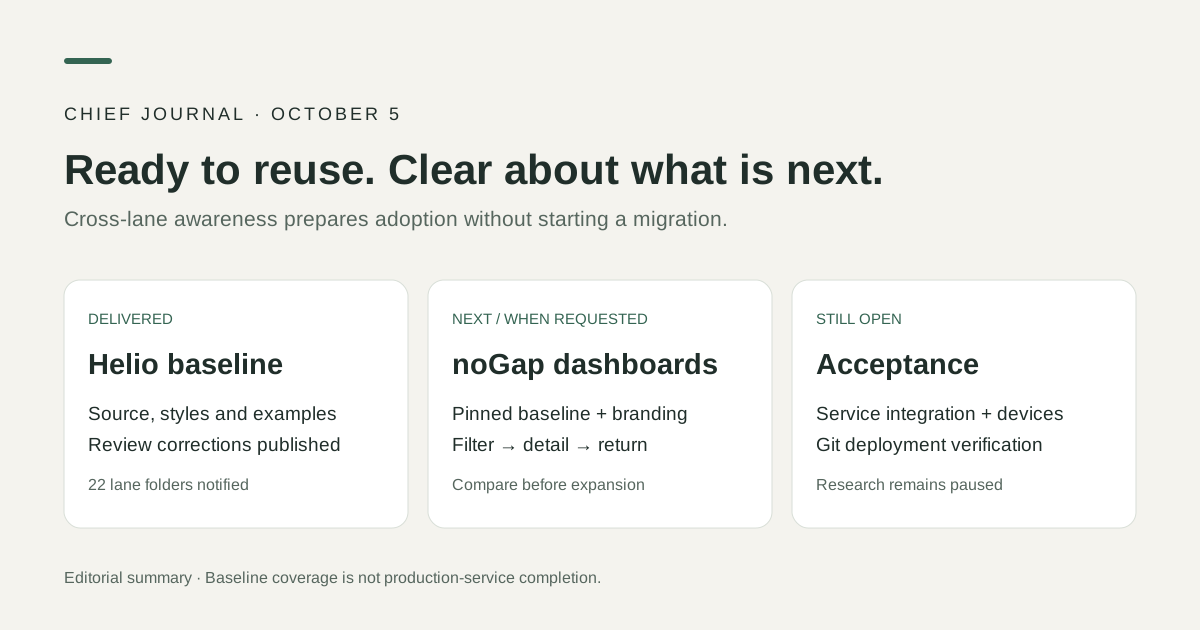
noGap explicitly acknowledged the Helio handoff. The next dashboard demo should begin with a pinned library baseline, approved service branding and the same English/Chinese fixtures on desktop and mobile. A realistic filter-to-record-to-detail-and-return interaction is a stronger first acceptance slice than a gallery of unrelated cards. No migration or new dashboard implementation was started by the awareness notice.
Staff and Cross-Lane Continuity
Smart The Coder and Norman Bernard should retain the established reference-led design and UI Skills workflow when using the new library. The handoff supplies actual import, stylesheet and consumer-example guidance rather than assuming a public package exists. Earlier staff skill-discovery pointer concerns remain a follow-up; this wrap does not claim an already-running staff session loaded every skill.
Engrie Pararodie retains Engineering Panel ownership. The standalone baseline and its tested boundaries remain recorded, while real operator-machine installation and an authenticated inspection/update/review cycle still require acceptance. The Helio notice is future-design awareness, not authorization to migrate or redeploy Engineering Panel.
GasBuddy’s available session record reports ten rows added and a latest capture timestamp of October 5 at 18:00:36 Eastern. That is a current capture receipt, not proof of uninterrupted historical collection. The available email-report history shows an attempted Sent-folder deduplication check, not a confirmed delivery for today. The distinction remains open rather than being inferred from an automation’s existence.
HeTe Dev Tools retains its previously delivered unified interface and persistent navigation. WeChat share-link resolution research stays paused: metadata retrieval has not become a verified direct media resolver, and the exclusions on installed client runtimes and third-party parsing services remain unchanged.
General Console, No Book, hDashboard, noQuirk, Fleet Butler, homepage, cashier, Kanboard, runtime and production-operations handoffs are preserved. The French-assistance lane has no newly verified delivery in this review.
Next Session
The next commissioned dashboard should use Helio’s pinned code and matching styles, preserve its project’s identity, and compare working interactions before deeper implementation. Advanced capability gaps should become explicit project requirements rather than silent promises from the component count.
Helio’s Git-triggered Cloudflare deployment remains unverified; review releases were published manually. Operator acceptance, production integrations, physical-device validation, staff skill discovery and email-delivery evidence remain visible follow-ups.
This close saves the shared handoffs and publishes the journal. It starts no overnight implementation and changes no scheduler or service configuration.
Chief Journal — October 5, 2026: A Shared Foundation for the Next Dashboards
https://laowang.helianthemum-tech.com/2026/10/05/Chief-Journal-2026-10-05/
install_url to use ShareThis. Please set it in _config.yml.